
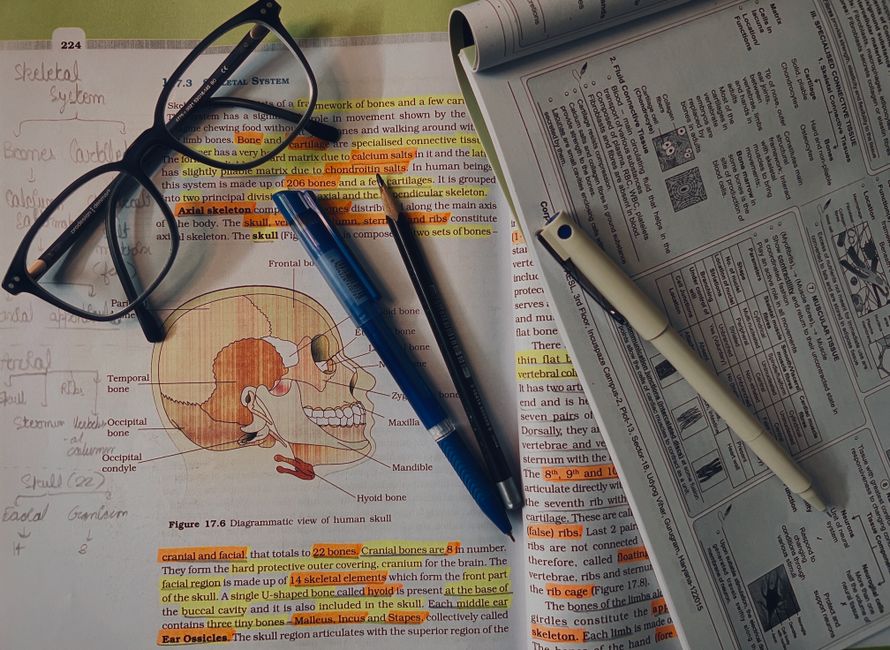
Quick answer: Want to turn lecture slides into awesome study notes? Don’t just copy! Instead, really dig into the material. Summarize it, put it in your own words, and add your own thoughts. Use methods like the Cornell Method, mind mapping, or Q&A to make those passive slides active learning tools. That’ll boost your understanding and help you remember things way better for exams.
Key Takeaways
- Summarize key ideas in your own words. Don’t just copy from the slides.
- Pull in info from everywhere: live lectures, textbooks, extra research you do.
- Practice active recall and spaced repetition as you make and review your notes.
- Add visuals like diagrams, flowcharts, and sketches. They really help you get it and remember it.
- Review and tweak your notes often. That helps concepts stick and keeps them easy to find later.
- Match your note-taking style to how you learn best and what each course asks of you.
Why Bother Turning Lecture Slides into Good Notes?
Just looking over lecture slides after class usually isn’t enough to really learn and remember things. See, slides are mostly just visual cues for the professor, a bunch of bullet points and quick phrases, not detailed explanations.
And if you just passively read that stuff, your brain won’t actually work hard enough to truly understand and solidify memories. But when you turn those slides into your own personalized notes, you force yourself to actively engage with the content. That’s a huge step toward doing well in your studies.
Good notes close the gap between hearing something once and actually remembering it long-term. They let you pull information together, link new ideas to what you already know, and arrange everything so it makes sense to you. This active work seriously helps you remember facts for your exams in 2026 and later.

How Can You Turn Lecture Slides into Study Guides That Actually Work?
Plenty of good ways exist to turn lecture slides into study guides that really pay off. And different methods work for different people and subjects. Picking the right one can make a huge difference in how well you understand and remember tough topics.
These aren’t just about copying stuff down. They push you to really think about, sort out, and make the lecture info your own.
Using the Cornell Method for Slides
With the Cornell Method, you split your paper (or digital page) into three parts: a big main section for notes, a narrower column on the side for cues or questions, and a short summary space at the bottom. While you’re in the lecture, or right after you check out the slides, you jot down your main notes in that big area.
Later, after class, you’ll pull out important questions, keywords, or prompts from those main notes and write them in the cue column. Then, at the very end, you sum up the whole page’s content in just a few sentences at the bottom. This structured way of doing things really helps with active recall and keeps you reviewing, which is super effective for tough subjects.
Mind Mapping (Great for Visual Learners!)
Mind mapping is a fantastic visual trick if you like seeing how things connect and fit together. Just put the main topic of your lecture or slide deck right in the middle of your page.
Then, from that central idea, draw out branches for the big themes and concepts that came directly from the slides. Each of those main branches can then have smaller branches for details, examples, or definitions. You can even use different colors, pictures, and symbols; that really boosts recall and gets your creative juices flowing. Mind maps are especially good for grasping tricky relationships and arranging tons of information visually.
Question & Answer (Q&A) Format
Turning what’s on your slides into questions and answers is a super effective way to practice active recall. As you look through each slide, come up with questions that the slide’s info actually answers. You can write the question on one side of your notes and the answer (in your own words) on the other side, or just below it.
Say a slide talks about “The Causes of World War I.” Your question might be, “What were the main reasons for World War I?” Then, your answer would be a short, clear summary of the bullet points on that slide. This method actually gets you ready for how you’ll think in an exam, forcing you to actively pull information out of your brain.
How Do You Blend Lecture Content with Your Notes?
Good study notes aren’t just summaries of slides, you know? They’re more like full learning documents that bring together information from all sorts of places. Blending different kinds of content helps you understand better and gives the material a richer background.
Hear a great story from your professor? Jot it down. Does your textbook explain a slide concept way better? Then either make a note to check it or just rephrase it directly in your notes. Even your own examples or personal thoughts can make confusing ideas click and stick in your mind.
Let’s say your lecture covered a historical event shown on a slide, but your textbook gave you more details or a different viewpoint. Well, add all that into your notes for that specific event! This way, your notes become a truly complete resource for learning.

Steps to Turn Lecture Slides into Awesome Study Aids for 2026
Turning raw lecture slides into truly useful study notes works best with a clear plan. Follow these steps, and your notes will be thorough, organized, and perfectly set up for maximum learning and recall for the 2026 academic year. These steps aren’t just about reading; they demand active involvement at every stage, helping you build a strong base of knowledge.
Step 1: Glance Over the Slides Before Class
Before the lecture, quickly skim the slides. This pre-reading gives you an overview, shows key terms, and helps you guess main points. It primes your brain for the info ahead, making it easier to absorb and organize during the talk. Jot down any questions that pop up during your preview. That gives you specific things to listen for, turning passive listening into active learning.
Step 2: Really Listen and Make Notes During Class
In the lecture, listen for context, explanations, and details not written on the slides. Use slides as an outline, but focus notes on what the lecturer says—what expands or clarifies slide content. Jot down examples, clarifications, prof’s insights, and questions. Don’t write everything. Instead, pull ideas together, grab the main point. Use abbreviations and symbols to speed up.
Step 3: Pull Everything Together and Rephrase Right After Class
Within a day of the lecture, organize your notes. This is where you actively turn lecture slides (and your live scribbles) into solid study material. Put concepts in your own words, fill gaps, and arrange scattered points so they make sense. This consolidation is super important for memory. It lets your brain work through info while fresh, moving it from short-term to long-term. Build one main document: slides, handwritten notes, and any other details you remember.
Step 4: Add Visuals!
Never forget visuals’ power. As you combine notes, add diagrams, flowcharts, timelines, or quick sketches for complicated ideas. Did a slide have an important diagram? Redraw it in your notes with your own labels and comments. Visuals break up text, make things easier to remember, and simplify tricky processes or relationships. They give your brain another way to hold onto and pull out information.
Step 5: Practice Active Recall
Once notes are organized, use them for active recall. Don’t just reread—test yourself! Cover parts, try to remember info. Use Cornell’s cue column or Q&A flashcards. Go back to notes regularly, maybe weekly or bi-weekly, to help things stick. Spaced repetition is a proven way to improve long-term memory and get ready for exams.
What Tools Can Help You Turn Those Slides Around?
Good news: the digital world has tons of tools to make your note-taking and revision smoother. Using these tech options can definitely make it easier and faster to convert lecture slides into solid study notes.
You’ll find everything from basic document creators to fancy systems for managing information. There’s probably a tool out there that’s just right for you.
- Digital Note-Taking Apps: Tools like OneNote, Notion, and Evernote let you import lecture slides, add notes, embed audio, and organize everything. They also have search, making finding info easy later.
- Mind Mapping Software: MindMeister, XMind, and Coggle help you create colorful mind maps. Perfect for visualizing complex relationships and brainstorming.
- Flashcard Apps: Anki and Quizlet turn key slide concepts into digital flashcards. They boost active recall and use spaced repetition for optimal learning.
- PDF Annotators: Adobe Acrobat or free alternatives let you highlight, comment, and draw directly onto PDF slides. Merge your initial thoughts with the original content.

Things That Go Wrong When You Turn Lecture Slides into Notes (and How to Fix Them)
You want to make great study notes, right? But lots of common blunders can mess up all your hard work. Knowing what these traps are means you can tweak how you do things and keep your note-taking strategy strong.
Seriously, dodging these common errors is just as vital as doing things the right way.
Mistake 1: Just Copying Everything
Lots of students just copy the lecture slides word for word into their notes. But that passive act barely makes your brain work and doesn’t really help you understand things deeply. It just gives you a copy of the original, not a tool that actually helps you learn.
How to avoid it: Always put the information in your own words. Focus on getting the concept, then try to explain it to yourself as if you were teaching it to someone else. Condense, reword, and combine ideas, don’t just write it all down exactly as you see it.
Mistake 2: Only Relying on the Slides
Thinking that the slides alone have all the info you need? That’s a big mistake. Slides are usually just quick summaries or talking points for the professor. They don’t have the whole story or all the detailed explanations you hear in class.
How to avoid it: Mix what’s on the slides with your notes from the lecture, your textbook readings, and any extra research you do. Your notes should be a complete picture, not just a reflection of the slides. Always look for more details and other viewpoints.
Mistake 3: Messy Notes
If you take notes without a clear structure or system, you’ll end up with scattered, confusing papers that are a real pain to review. Messy notes just make studying harder and finding specific info next to impossible when you really need it.
How to avoid it: Pick a consistent note-taking method (like Cornell, outlining, or mind mapping) and stick with it. Use headings, bullet points, numbers, and colors to create a clear visual order. And if you’re struggling, think about using digital tools; they often make reorganizing much simpler.
Mistake 4: Not Reviewing Often Enough
Making great notes is only part of the job. If you don’t look them over regularly, all that effort pretty much goes to waste. Facts just disappear fast from your memory if you don’t keep refreshing them—it’s called the “forgetting curve.”
How to avoid it: Block out time for regular note reviews. Use spaced repetition: look at the material at longer and longer breaks (like after 1 day, then 3 days, a week, then two weeks). And here’s the kicker: actively test yourself with your notes, don’t just read them again.
Frequently Asked Questions
How often should I review my transformed lecture notes?
You really should review your notes within 24 hours of the lecture. After that, look at them again at increasing intervals, maybe after 3 days, then a week, then 2-4 weeks. This spaced repetition helps your long-term memory work best.
Is it better to take notes digitally or by hand from slides?
Both ways have their good points! Digital notes are easy to search and keep organized, but writing by hand often makes you process things more deeply because you’re writing slower. Just pick the method that feels right for how you learn and what the course is about.
Can I use my transformed notes for open-book exams?
Absolutely! Good, clear, and well-organized notes are super helpful for open-book exams. They let you find specific information fast and actually understand concepts, instead of just wasting time hunting through the original slides or thick textbooks.
What’s the best length for study notes from a one-hour lecture?
That really depends on how much info is packed into the lecture and your personal style. But usually, for a one-hour class, you’re looking at about 2-4 pages (digital or paper) of good, complete notes. The main thing is to keep them short and to the point, focusing on the really important stuff, not just making them long.
Should I include examples from the lecture in my notes?
Definitely! Adding examples from the lecture is a huge plus. They help you really nail down those abstract ideas and give you real-world cases that make it way easier to remember and understand all that theoretical information.